


MIB | AMBASSADORS | IMPACT
JOIN | EVENTS | PARTNERS
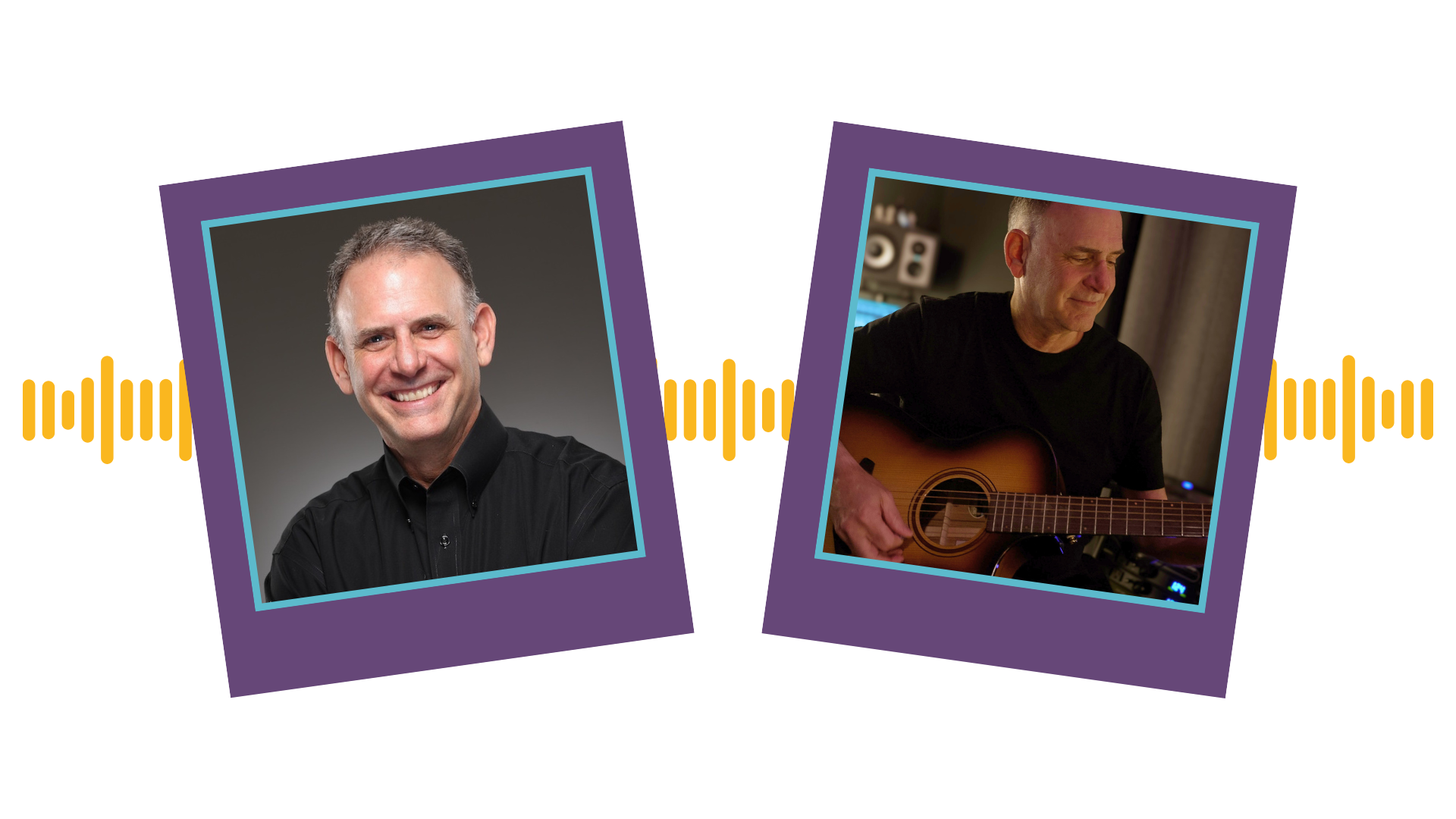
Larry Mohl
Founder, Third Space Music
President, Stratplay Advisory
“Sitting and playing brings out things I am feeling, things I want to say, ideas for the future, and a sense of peace that no other medium does for me.”
Larry Mohl is a strategic advisor, entrepreneur, author, songwriter, and musician whose professional life has been guided for more than four decades by two enduring passions: helping people and organizations work better together and exploring music’s power to connect and transform lives.
His career includes senior leadership roles at Motorola, American Express, and Children’s Healthcare of Atlanta, as well as the founding of several consulting and technology companies. He holds four international patents and is the co-author of the Wall Street Journal bestseller Networking Is Dead: Making Connections That Matter. Today, he serves as President of Stratplay Advisory and is the Founder of Third Space Music, a creator-led music company where authentic songwriting and curated collaboration come together to create emotionally resonant music.
A proud product of public school music education, Larry began playing violin as a child before discovering a lifelong love of guitar. His musical journey has included orchestras, rock bands, jazz ensembles, wedding bands, and Chicago theater, where he worked as a composer and sound designer. He now brings this combination of professional experience, musicianship, and commitment to equitable music education to ETM-CO as a member of its Board of Directors and a Musicianship in Business Ambassador.
Through its charitable partnership with ETM-CO, Third Space Music helps bring high-quality music education to students in under-resourced public schools, giving more young people the opportunity to experience music’s transformative power.
Tell us about your professional journey and what defines your work and leadership today. What motivates you in the role you hold and the field in which you operate?
My journey has been one of pursuing innovation, transformation, connection, and impact. I started out as an electrical and systems engineer at Motorola, working on developing technology that was eventually used to transition from analog to digital mobile communications. I transformed my 20-year career at Motorola by moving from engineering to quality improvement to knowledge management and finally to serving as the Chief Learning Officer for the Cell Division. I continued to innovate human resource systems and play a role in transformations at American Express and Children’s Healthcare of Atlanta. After over 35 years in corporate roles, I decided to listen to my entrepreneurial voice and start a consulting firm, which then transformed into an HR technology company starting in 2016. With an exit at the end of 2025, I now serve as a strategic advisor to corporate and government entities pursuing transformation. My biggest motivation is to have a positive impact on people’s lives. I take these core principles with me into my new venture, Third Space Music.
How has music been part of your life? When did it first enter your life, and how has it evolved over time—whether through playing an instrument, singing, composing, or other forms of musical practice?
My passion for music was sparked at the age of four when my parents took me to see my hometown Buffalo Philharmonic Orchestra. I am a proud product of public school music education. My early love for violin turned into a lifelong love of guitar. Playing in orchestras, rock bands, jazz ensembles, and wedding bands served to broaden my abilities as a multi-instrumentalist, songwriter, and performer. I also worked in the Chicago theater community as a theatrical composer and sound designer, earning a Joseph Jefferson Award nomination. Music has always been an equal companion to my roles in business.
Many leaders recognize that the skills developed through music extend far beyond the stage or rehearsal room. Learning and practicing music often strengthens qualities such as listening, discipline, collaboration, creative thinking, resilience, and the ability to perform under pressure—skills that are also essential in professional life. Looking back, how has music shaped the way you think, collaborate, innovate, or lead in your professional life?
Music has had a tremendous influence on the ways I have led and worked as a professional. The first way is in the area of personal skills. I tend to look at the world as interconnected systems. I like to look at situations from multiple perspectives and find what connects things, balancing creative and critical thinking. I believe my involvement with playing instruments and writing music strengthens these abilities. The second is the area of diversity of connection. Playing music from many different genres with people from many different backgrounds has only strengthened my desire and ability to connect with people different from myself. Third is the world of leadership. I have used music both as a metaphor to communicate important concepts and as a tool to engage individuals and teams in experiences that unlock new ways of understanding, connecting, and working. Finally, there is the area of culture and identity. I have used music intentionally to help leaders discover and communicate their core values in a way that is memorable and activating for the people they care about.
Can you recall a moment in your professional life when your experience with music helped you navigate a challenge, make a decision, collaborate with others, or unlock a creative solution?
Yes. I was working with some people who were trying to get an innovative new project started but were struggling. After discussion, I realized that they were trying to set up their project using the same rules they use for running their operation. I gave them the analogy of an orchestra versus a jazz ensemble, having played in both. The innovation project at this stage needed to work more like a jazz ensemble, utilizing core principles, enabling experimentation that might “sound bad” in the moment, letting different people lead at different times, and listening for connections and clues as to what comes next. I said that once the jazz ensemble got to something that was repeatable, they could hand it to the orchestra to refine it and perform it, or execute it, every day. This little analogy unlocked a new way of thinking for them, which unlocked their project.
What resonates with you about ETM-CO’s mission to ensure that music is part of every child’s education—especially in under-resourced schools—and why do you believe access to music from an early age matters for the next generation?
When my daughter’s middle school music program was canceled, I was very upset. Having taken advantage of all the music opportunities given to me in middle and high school, and knowing the impact these experiences had on me, I was quite frankly shocked. Since then, I have been a student of the impact of music. Studies over the last decade have shown that learning music engages multiple brain systems, supporting neural connectivity and cognitive skills such as attention, working memory, and flexible thinking. In addition, we know from experience that engagement in music builds confidence, strengthens relationships, fosters collaboration, and creates a sense of belonging. All of these benefits are especially important for children today. Why? Because they are growing up in an increasingly disconnected world with increasingly complex problems that require people to come together to solve. Children in under-resourced schools are more at risk of getting lost in the turmoil of the world without the skills to build personal agency. Music can help this. But there is one other huge reason. Joy! The joy of learning to play something well. The joy of hearing instruments and harmonies come together that gives you the tingles. The joy of a look to a fellow player that says a thousand things without saying a word. The joy of music that lifts your spirits when you need it most.
And now, the most difficult question—one we often ask our students. What does music give you today that nothing else does?
Connection. First, connection to myself. Sitting and playing brings out things I am feeling, things I want to say, ideas for the future, and a sense of peace that no other medium does for me. I am “connected” to a lot of people, but a musical connection is deeper. It can happen through playing with others or with people who just love similar music, but you can feel a shift. A shift that says, “I get you,” and “I’m glad I have someone to share these things I can’t quite put into words with.”